

One, Two, Three, Four!
My post-highschool concentration in college was classical music; I was an orchestral trumpet player, and I aspired to be part of a world class ensemble one day. Life had other plans for me, and that's totally fine. But part of studying professional music is rhythm training. So with that in mind, I like to think I'm pretty good at discerning unique rhythmic patterns and staying on the beat.
Rhythm Heaven Groove made me feel differently - at least at first.
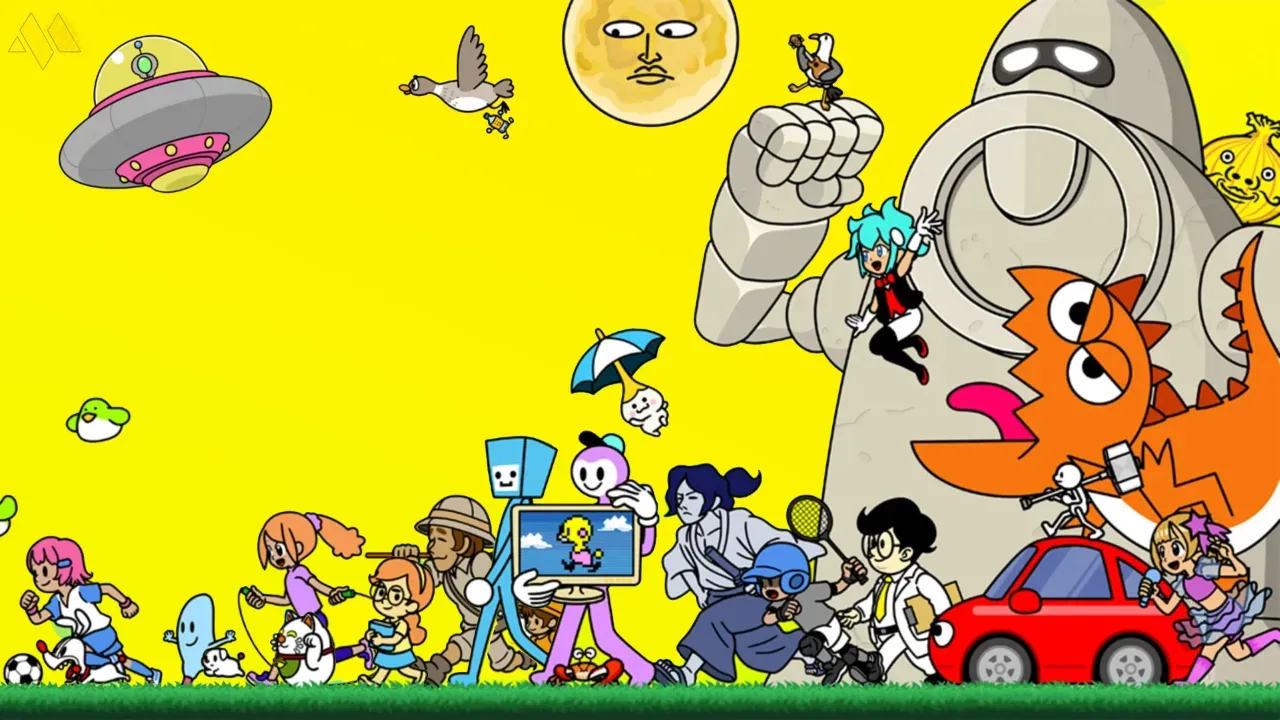
For the uninitiated, you can think of Rhythm Heaven sort of like a musical WarioWare. The game consists of bite sized one-trick minigames that test your ability to recognize patterns and time your presses to the beats (or offbeats, depending). It's a very simple premise, but never overstays its welcome, and it's got legs for days - Groove is the fifth entry in the series since 2006. Each minigame features a single action to perform, with slight variations thrown in to see if you're paying attention. It's easy to learn, and hard to master. Such a simple gameplay conceit only works if the presentation is appealing for the duration of the experience, and this is where Rhythm Heaven sets itself apart from other rhythm games.
Spin Spin! Dance, Dance! All Right!
The settings for these minigames are wild and varied, and often hilarious. They range from the mundane - chopping vegetables or driving a car - to the patently absurd - bouncing fruits off your biceps, or communicating with an alien by completing his rhythmic phrases. Are you an aspiring soccer player daydreaming about your crush while you practice your traps and bicycle kicks? Or are you a robot in a pudding factory catching puddings without letting them squish? The lack of an overarching narrative allows the creative minds at Nintendo to throw whatever they darn well please at the player, and it's this unhinged approach to the presentation that makes Rhythm Heaven work so well. I'm not gonna mark the game down for this, but I did find myself wishing the game had a free Switch 2 update so the animations could be viewed at a higher resolution. That's a total nitpick in a game like this, but coming off of the sharp and beautiful Star Fox, I did find myself noticing that the presentation is just a little bit soft on my 77" 4K television.

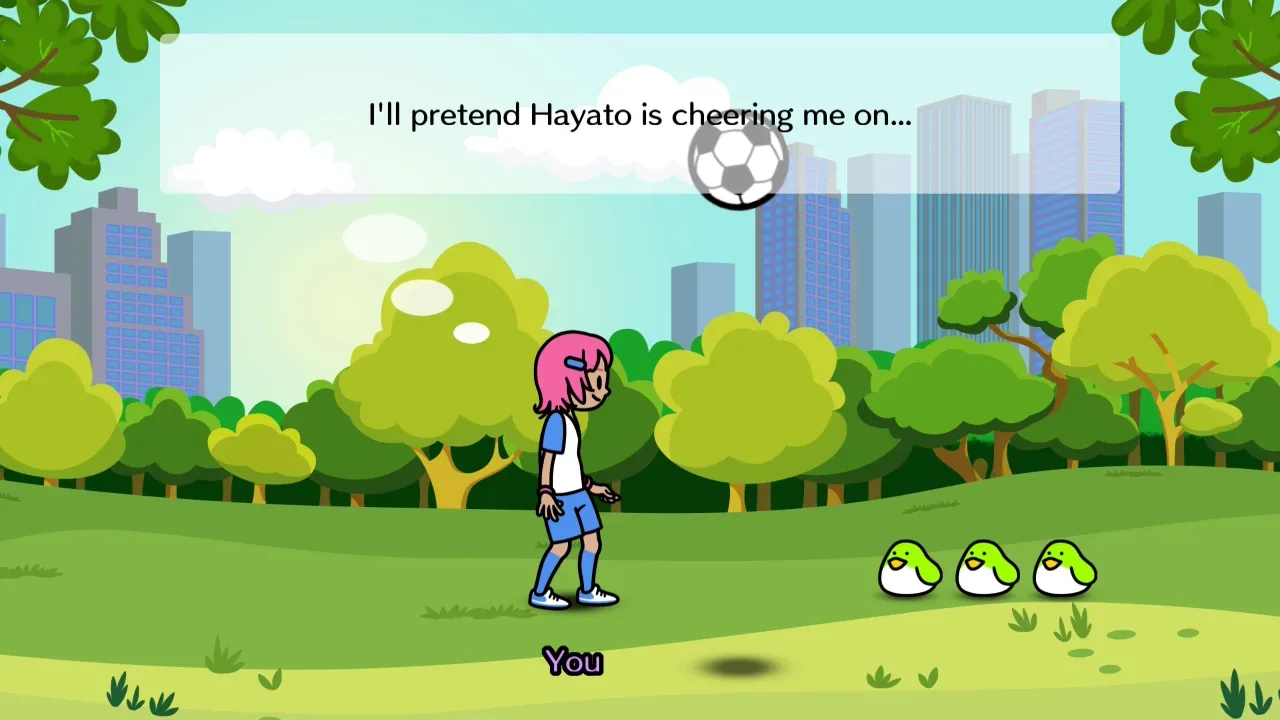
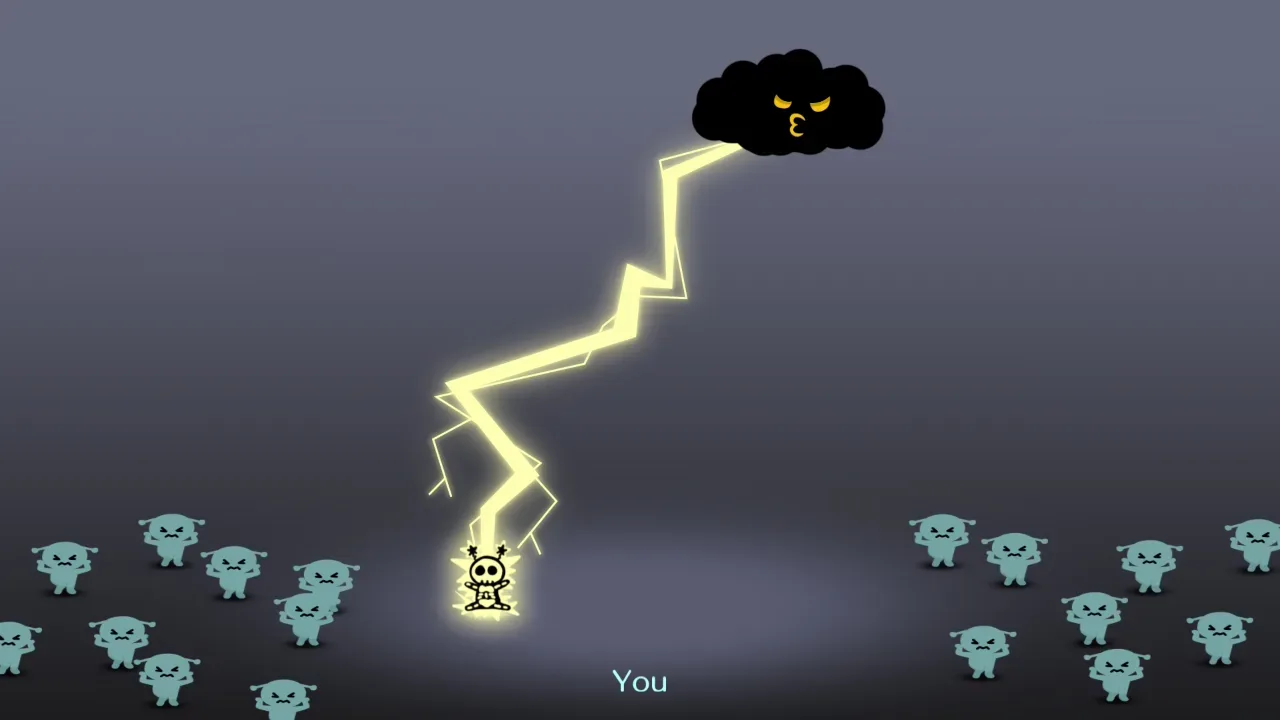
There are a few minigames that stood out for me, either because the game itself is fun to play or because the music is so catchy. "Slice N Dice Kitchen" is an early one seeing a woman chopping vegetable in her kitchen. Press the button on the signal to catch the veggies flying in from off screen; watch out for the yellow peppers, which signal that three quick eighth-note broccolis are incoming! "Sweeper Star" Has you take on the role of a member of a boy band comprised of sweeping janitors, sweeping the floor and hitting poses to the beat. "Lightning Bolting" sees you as a funny little alien guy, dodging an angry cloud's lightning bolts by warping out of their way on the beat. There are many more entertaining vignettes, but I don't want to give them away.

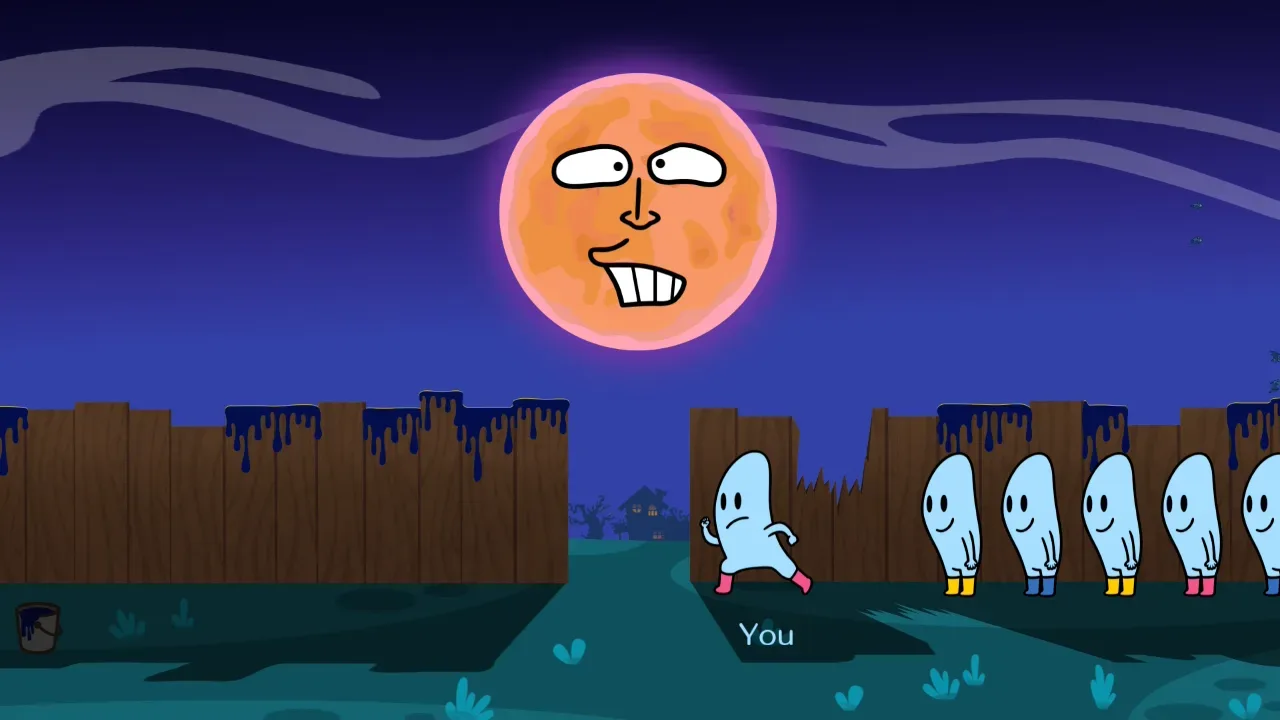
Unfortunately there are also a couple duds, and some that aren't bad, per se, but feel a bit undercooked. These are a bit more subjective; one man's trash, and all that. "Can Do", a game about smashing soda cans with a giant hammer, just doesn't feel very satisfying even when you're succeeding. "Sneezy Moon", a game about ghosts trying to sneak past an angry moon's line of sight when it sneezes, is a fun premise on paper. In practice, the sneeze sound effect is grating and the game goes on for just a little too long.
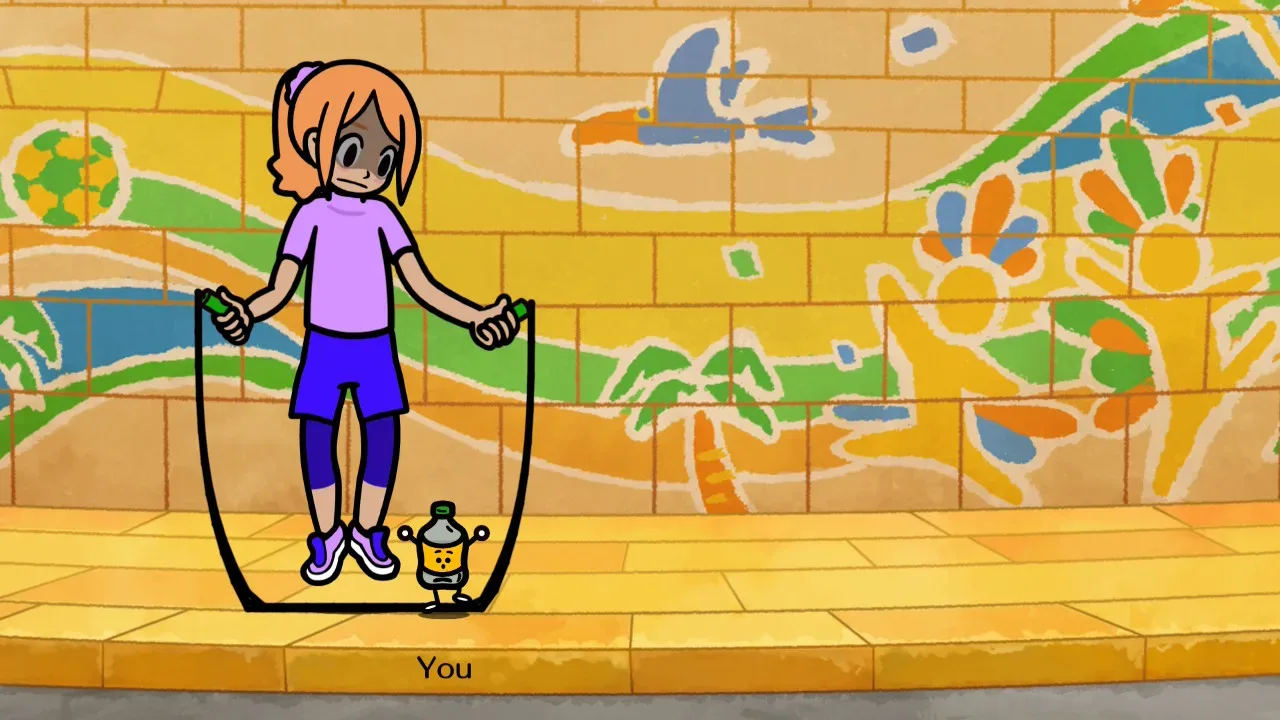
"Soda Hop" shows up later in the game, and was one I initially hated but came around to really love, because it is one of the biggest rhythmic brain busters in the game. You jump rope by pressing A on the beat (on 1, 2, 3, and 4, like you'd expect), but sometimes your character will do a double-under, which "turns the beat around," as it's known. Now instead of the beats, you're operating on the offbeats (If you subdivide a 4 beat bar, it would be the "and" counts between the numbered beats: 1 and 2 and 3 and 4). I had to sit and practice this one for ages because "turning the beat around" is a bit of a musical no-no in most contexts, one that they try to teach out of you in music school. If you've turned the beat around, it usually means that you're accidentally misaligned with the rest of your ensemble by a half-beat. Retraining myself to willfully go back and forth between on the beat and being turned around gave me some real trouble. That's totally an issue unique to me and possibly others with similar musical backgrounds, and there's actually nothing wrong with the premise at all. It ended up being one of the most satisfying games to play and master once I wrapped my head around it.
"Yum-Bot Simulator" is the pudding robot game I mentioned before, and it might be my least favourite in the bunch. Puddings fall out of a dispenser, and you have to either gently catch them and place them on the conveyor belt, or blast them with your eye lasers if they're rotten. This would be fine, but the timing for both of these actions is strange, almost like the audio and video cues are misaligned; I couldn't get a confident bead on the timings.
There are lots and lots of these minigames, but I couldn't help but feel like there could have been more of them. The games are bite sized, and so you fly through the collection pretty quickly. Worse than that, the game pretty quickly starts to recycle the minigames with small variations or added rhythmic challenges. This isn't necessarily a bad thing, because these games were all made to be replayed. I am just torn between thinking the package is genuinely light, and thinking I just didn't want the party to end. I can acknowledge that creating all these music tracks, and syncing games to said music, is not a small amount of work.
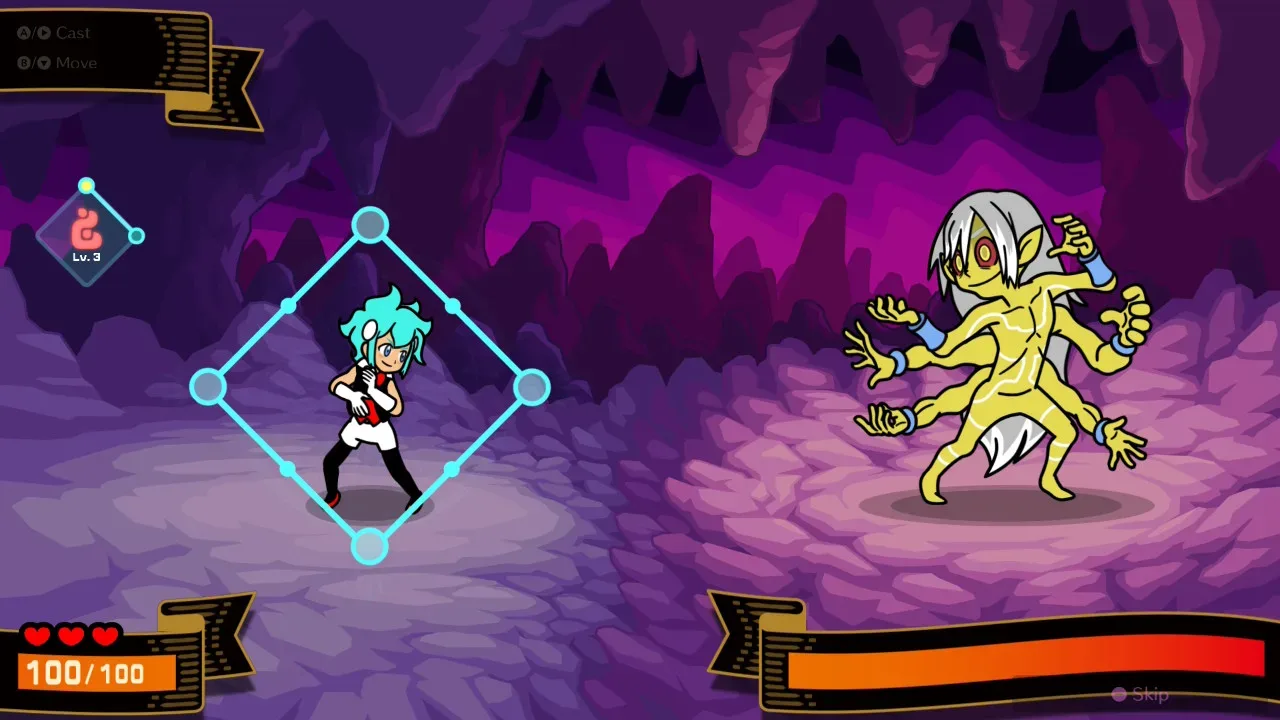
Luckily, there are some alternate modes to break things up. The most interesting one is Beatspell, which plays out like a rhythm-JRPG, and sees you casting spells to the beat to defeat monsters before they chip away your HP. This is a great idea, but is tragically the most undercooked idea in the whole package. There's not much meat on these bones. This mode is, however, responsible for me starting to have fun with the game, but unfortunately it isn't for the reasons I'd like.
Not Quite My Tempo
The major failing I identified with Rhythm Heaven Groove is its ability to synchronize itself to your living room's AV setup or whatever other external audio devices you might have connected such as wireless headphones. The game goes out of its way to openly admit that you may have trouble in these configurations. I consider myself pretty good at keeping rhythms and timings. So when various minigames kept insisting that I was doing it wrong, I started digging into things a little deeper, because surely I wasn't the problem - right?
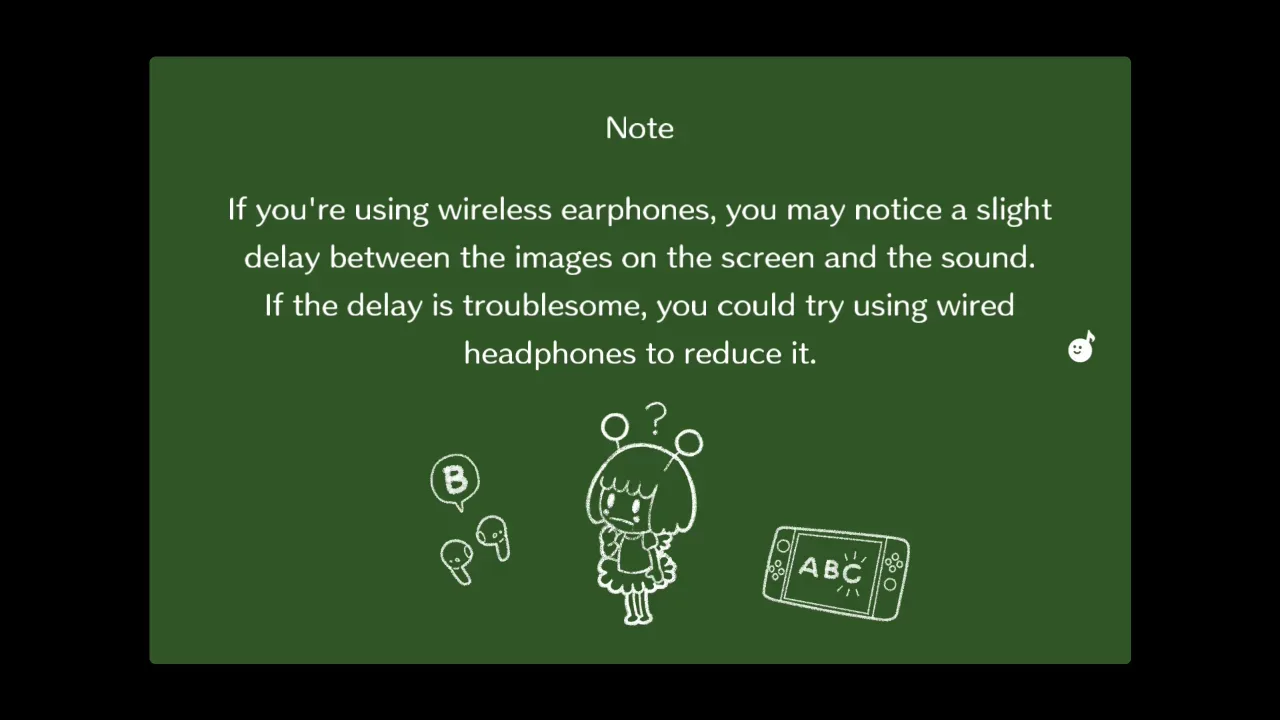
This is where Beatspell came to save the day. The mode visually shows you exactly where your button presses are landing versus the beat. I was being read by the game consistently almost a sixteenth of a measure late, which is more than enough of a rhythmic distance to warrant the game interpreting incorrect inputs. Turns out that the audio latency introduced by my (old) 5.1 channel AV receiver was so extreme that I was on the beat audibly, but that means it was well after the game expects me to have heard it. I suppose I'd just got used to that delay on my home system. The game's audio and video is calibrated to work best in handheld mode, and I did find myself having a better experience that way.
To Nintendo's credit, there is a TV delay calibration tool. This has you pressing the A button on every upbeat (The fourth beat in a 4 beat bar), in order to synchronize the video to the audio based on an average of how it sees you interpreting the timing. This sort of helped, but it's not an exact science. I'd have really loved the ability to dial in the amount of audio delay in milliseconds manually to really make it feel correct on my setup. In the end, I messed with game mode and other latency-affecting settings on my LG OLED to try to line it up better, and got myself to something playable between that and the game's calibration tool. A shame more effort couldn't have been spared to really help the user dial in their experience in lieu of replacing their whole AV setup.
The Tsunku♂ Factor
The WarioWare comparison I made earlier is apt because the same internal Nintendo team handles development of both IP's, and it shows in the wacky art styles and characters. I've seen fan-favourite Karate Joe in both franchises, for instance, and it's my understanding that a prior entry in the Rhythm Heaven series actually has a whole WarioWare crossover challenge. (I've only played Groove and a little bit of Wii's Fever, so I'm not exactly the final word on the history of this series).
Where Rhythm Heaven's presentation deviates from WarioWare in particular is that it is overseen by famous Japanese musician Tsunku♂. His musical style turns out to be a major part of the game's, and indeed, the series' identity. Every minigame has an earworm of a track to keep you bopping along to the beat. It's my understanding that having Tsunku♂ back on the series to make Groove is special, too, since he lost his singing and speaking voice to a battle with laryngeal cancer around 2015. I can't imagine the series without his signature style of catchy hook, so it's great to have him return here. The game itself refers to him as the game's "Miracle Producer" in the credits, which I think is very sweet.
Without Further Ado
No conversation about Groove would be complete without talking about the guest artists who provided their talents for certain minigames. I won't spoil them all here, but the most exciting one is, far and away, Japanese pop star Ado's original song, "Love Me Forever!" I hope you'll indulge me while I go full musical analysis on you for a moment:
Ado understood the assignment. She's brought it, collaborating with Tsunku♂ to create a song that's incredibly rhythmically strong for the sake of the minigame it's attached to without diluting Ado's musical signature. It opens with a strong four on the floor drive that gives way to a 3-against-4 cross rhythm, before the chorus brings you triumphantly back into four. These polyrhythms are perfect for throwing interesting patterns at the player, and coming in and out of straight four keeps you on your toes.
Harmonically is where this song wowed me though. the chorus opens on a strong major tonic chord. This trains your ear to expect that bright sound when it reprises, but Ado keeps it interesting by opening the second chorus section on a deceptive submediant chord before falling back into the original progression. She ultimately sticks the landing, ending it off with a classic flat six, to flat seven, to tonic motion, fittingly known as the "Nintendo" or "Mario" cadence. In my opinion, pop music in Japan, and indeed, music in general, is just much more harmonically interesting than a lot of what we churn out here in the West.
It's a perfect song for the package, marrying Ado's signature striking vocal and harmonic style with the necessary requirements of a rhythm game. As an aside, there's an adorable VOD of Ado playing the level and hearing her own song in context. She is absolutely stoked to be a part of the project and freaks out upon seeing an Ado-centric easter egg that I won't spoil here for the fans. It's great to see such a prolific talent be so humble and excited to be a part of something.
Music Theory Corner with Brayden is now over. You can unglaze those eyes.

Ado isn't the only guest star here, though perhaps regrettably, she overshadows the rest of them to varying degrees. I won't spoil them all, but a few enjoyable ones for me include Reina Nishi's vocal debut in "Odoreba Dance!" and Jacky Hallim's French language "Tu es ici, moi aussi!" In fact, I was surprised how much of the music was in varying languages. There's English, Spanish, French, and of course Japanese, that I can recall. It's a fantastic musical package overall, because Tsunku's style is so effective when the guests aren't taking the stage. And thank goodness for that - you can't have a rhythm game with bad music!
If This Were A Test, We'd Say…
Overall, Rhythm Heaven hits all the right notes. It's not perfect - some of the games are half-baked versus others, and there are some truly unfortunate audio-video synchronization issues. The lack of granular audio latency settings is enough to keep me from giving Groove a higher score; it's not the end of the world, but it does matter when your game depends on keeping a beat. Thankfully, though, these weren't enough to stop me gobbling up everything this game has to offer. The vignettes are funny and charming, the music goes hard, and the challenge level exists right in that perfect "easy to learn, hard to master" zone. Whether you're a longtime fan or you're new to Rhythm Heaven, this one gets an easy recommendation from me. I'm giving it a 4, but that doesn't mean I think it's just "okay". This is a great package. I'm simply holding Groove to a tougher standard, because despite all the things it does right, its simplicity lends itself to shooting even higher.